SaaS MVP development is the fastest, lowest-risk way to turn a software idea into a validated, revenue-ready product in 2026. By building only the features that solve one urgent problem, teams launch in 8–16 weeks, cut build costs by up to 60%, and test real willingness to pay before committing $150K+ to a full platform
Every category-defining SaaS company started as something embarrassingly small. Slack was an internal chat tool. Dropbox launched with a demo video. Airbnb was an air mattress and a landing page. The pattern is not an accident — it is a method. And in 2026, with AI compressing build timelines and investors demanding traction before term sheets, that method matters more than ever.
This guide walks through the complete SaaS MVP development playbook we use at Technobrave: how to validate before you build, what it costs, which stack to choose, and the metrics that tell you when to scale — or pivot.
Key Takeaways
- Poor product–market fit was cited in roughly 43% of the 431 VC-backed startup shutdowns CB Insights analyzed between 2023 and 2026 and two-thirds of those were early-stage companies that never found a market.
- The global SaaS market is projected to reach about $465 billion in 2026 (up from $408 billion in 2025, per Precedence Research), so demand is real — but so is the competition for every niche.
- A well-scoped SaaS MVP launches in 8–16 weeks for $15K–$90K, versus 6–18 months and $150K–$500K+ for a full platform making it the cheapest way to buy certainty.
What is SaaS MVP Development, and Why Does It Matter More in 2026?
SaaS MVP development is the process of building the smallest working version of a cloud software product — with just enough features to solve one core problem for a defined user group and gather real user feedback before full-scale investment. The key word is viable, not minimum. A minimum viable product (MVP) must work, look credible, and deliver value; it simply doesn’t do everything the eventual platform will.
Why does this matter more in 2026? Two forces are colliding. First, the market is enormous: Gartner’s February 2026 forecast names software the fastest-growing IT spending category at 14.7% year-over-year growth (Gartner, 2026). Second, AI-assisted engineering has made shipping cheaper for everyone — including your competitors. When building is easy, validating the right thing to build becomes the real moat. That’s exactly what disciplined SaaS product development at the MVP stage delivers.
Why Do Most SaaS Products Fail Before Their First 100 Paying Users?
Most SaaS products fail because the wrong version of the product meets the market first — not because the idea was bad. CB Insights’ latest analysis of 431 VC-backed startups that shut down since 2023 found that poor product–market fit was cited in about 43% of failures, and two-thirds of those PMF failures were early-stage companies that never found a market at all. Running out of capital — cited in roughly 70% of shutdowns — is usually the symptom, not the disease: products nobody urgently needs don’t generate revenue, so the cash runs out.
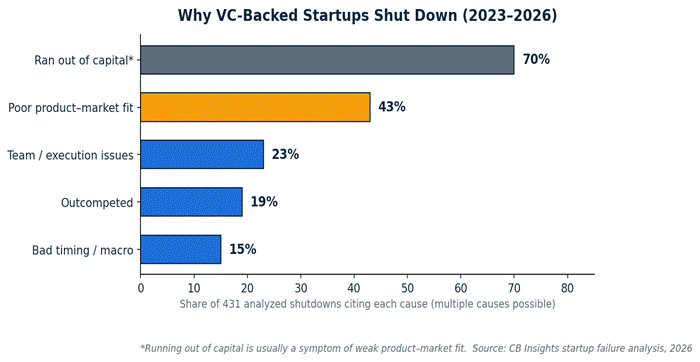
Product–market fit failure is the root cause behind most startup shutdowns. Source: CB Insights, 2026.
At Technobrave, across the last 14 SaaS MVP builds we delivered, discovery workshops cut founders’ initial feature wishlists by an average of 58% before development began. One logistics client arrived with 11 planned modules; startup validation interviews with 20 fleet managers narrowed the launch scope to a single dispatch-automation feature. That MVP shipped in 11 weeks, converted 31% of trial users to paid within 60 days, and the founder raised a seed round on that traction — with 9 of the 11 original modules still unbuilt.
The lesson: in MVP software development, restraint is a competitive advantage. Every feature you don’t build is budget preserved for learning.
The 7-Step SaaS MVP Development Process That De-Risks Your Launch
Each step below exists to eliminate a specific risk before it becomes expensive. Skip one, and you pay for it downstream — usually at 5–10x the cost.
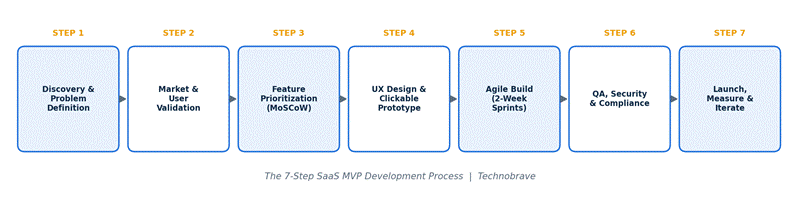
Technobrave’s 7-step SaaS MVP development workflow, from discovery to iteration.
Step 1: Define One Core Problem (Not Five)
Run a 1–2 week discovery sprint: interview 5–10 target users, map competitors, and write a one-sentence value proposition. If you can’t pitch the value in one sentence, the scope isn’t ready for MVP app development. One urgent, narrow problem beats five mild ones every time.
Step 2: Validate Demand Before You Build
Talk to strangers, not friends. Real startup validation means at least half of your interviewees describe the problem before you mention it and at least one expresses willingness to pay. Landing pages, waitlists, and pre-sales are cheap demand tests that cost days, not months.
Step 3: Prioritize Features With MoSCoW
Sort every feature into Must-have, Should-have, Could-have, and Won’t-have-for-now. Your MVP scope is the must-have column only. Any feature added later needs a written justification tied to the core problem that single rule kills scope creep, the number-one budget destroyer in SaaS application development.
Step 4: Design UX-First With a Clickable Prototype
Build the experience in Figma before writing code. Users judge software in seconds, and fixing a broken flow at prototype stage costs a fraction of fixing it after development. Simple navigation, a 30-second onboarding, and one obvious primary action beat visual flourish.
Step 5: Build in 2-Week Agile Sprints
Agile software development wins at the MVP stage because short sprints surface problems early and let user feedback reshape scope before months of work get locked in. Use proven building blocks Auth0 or Firebase for authentication, Stripe for billing to reclaim 3–4 weeks of commodity build time.
Step 6: Test for Stability, Security, and Compliance
Minimal scope never means minimal quality. Every must-have feature gets end-to-end functional testing, and regulated verticals (fintech, healthtech) need GDPR, HIPAA, or SOC 2 considerations baked in from day one retrofitting compliance later routinely costs six figures.
Step 7: Launch to Learn, Then Iterate
Launch to a closed beta or waitlist with analytics wired in from the first session. The purpose of an MVP launch is insight, not scale: gather usage data, run 2–4 week improvement cycles, and let real behavior not opinions decide what you build next.
How Much Does SaaS MVP Development Cost in 2026?
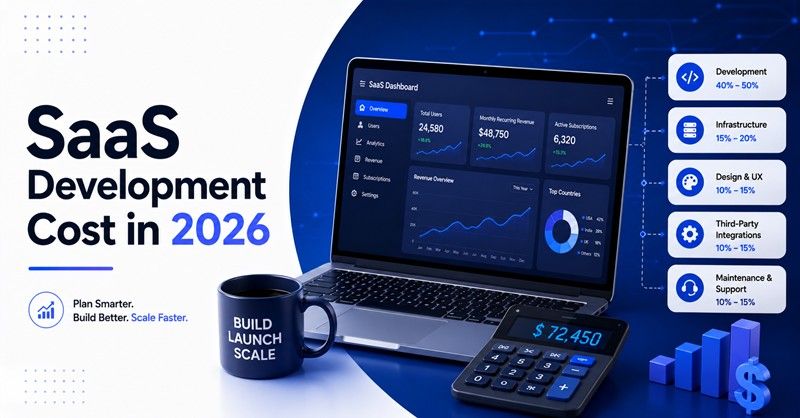
A SaaS MVP typically costs $15,000–$90,000 in 2026, with complex, compliance-heavy builds reaching $200,000+. The honest answer depends on three drivers: feature scope, team location, and regulatory requirements. A US-based senior engineer runs $100–$150/hour; equivalent talent in India or Eastern Europe runs $25–$60/hour, which is why offshore and hybrid custom SaaS development models routinely cut budgets 50–60% without sacrificing quality provided the vendor runs a real discovery process.
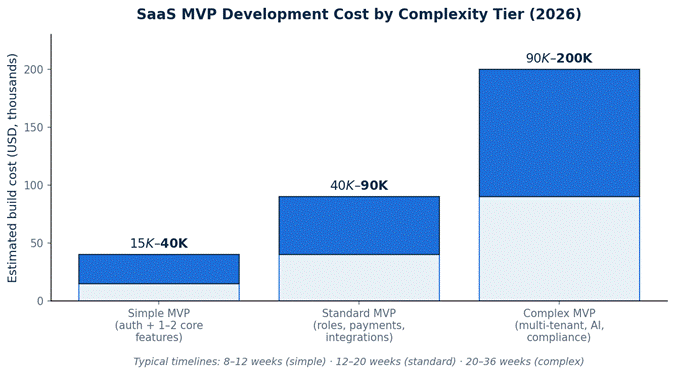
Figure 3: Typical 2026 SaaS MVP build costs by complexity tier (Technobrave project benchmarks and industry ranges).
Budget beyond the build, too: QA ($5K–$20K), cloud infrastructure ($500–$2,000/month at MVP stage), post-launch maintenance (15–25% of build cost annually), and compliance overhead (20–30% extra in regulated industries). For a line-item breakdown of every cost driver, see our full guide to SaaS Development Cost.
Which Tech Stack and Team Model Should You Choose?
The best MVP stack in 2026 is boring on purpose: React on the frontend, Node.js or Python/Django on the backend, PostgreSQL for data, and AWS or Azure for infrastructure. This combination is battle-tested, easy to hire for, and scales past the MVP stage without a rewrite. Start with a modular monolith premature microservices are the most common over-engineering trap in SaaS startup development. If your product’s core value is AI-driven (copilots, intelligent automation, predictive features), partner with a specialized AI SaaS development company so model costs and data architecture are designed in from the start rather than bolted on.
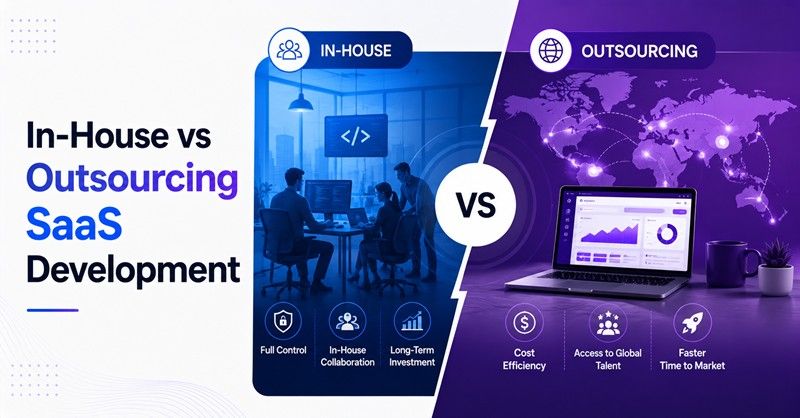
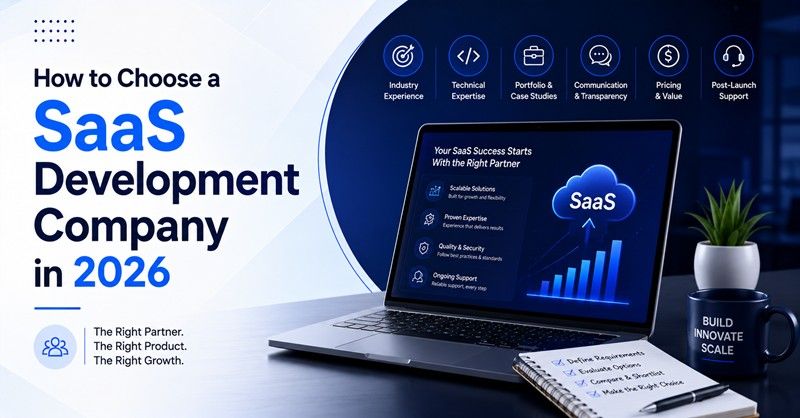
On the team side, you have three options: in-house hires (maximum control, slowest to start), freelancers (cheap, risky for multi-disciplinary builds), or a dedicated SaaS Development Company (fastest path to a launch-ready product with design, engineering, and QA under one roof). Before signing with anyone, ask four questions: Do they run discovery before quoting? Can they show SaaS-specific case studies with measurable outcomes? What’s their average MVP timeline? Do they have your vertical’s compliance experience? Our guide on How to Choose a SaaS Development Company covers the full evaluation checklist, including red flags like fixed quotes with no discovery phase.
How Do You Know Your MVP Is Actually Working?
An MVP is working when strangers use it, return to it, and pay for it — everything else is noise. Define three success metrics before launch, not after:
- Activation rate: the share of sign-ups who complete the core action at least once. Crossing 25% is a strong pull signal.
- Day-14 and Day-30 retention: are users still active weeks later? Holding 15%+ at Day 30 suggests genuine product–market fit forming.
- First paid conversion: did anyone pay, even at an introductory price? Willingness to pay is the only validation that survives contact with reality — and it’s what makes your SaaS business model investable.
Track behavior, not applause. Friends will tell you the product is good; login data tells you the truth. When new cohorts show the same adoption and retention as your first testers, and paying customers renew without discounts, you’ve earned the right to scale.
SaaS MVP vs Prototype vs Full Product: Which Is Right for Your Stage?
Prototypes validate direction, MVPs validate the solution, and full products scale what’s already proven. Getting the sequence wrong means spending full-product money on prototype-stage certainty. Use this comparison to place your idea:
| Aspect | Prototype | SaaS MVP | Full SaaS Product |
| Purpose | Test the concept visually | Validate the solution with real users | Serve and scale the full market |
| Functionality | Clickable designs, no backend | 1–3 working core features | Complete feature suite + integrations |
| Typical cost | $5K–$15K | $15K–$90K+ | $150K–$500K+ |
| Timeline | 1–4 weeks | 8–16 weeks | 6–18 months |
| Users | Stakeholders & testers | Real early adopters who can pay | Full customer base |
| Risk level | Minimal | Low and controlled | High without proven demand |
| Best for | Pitching co-founders & investors | Testing demand & pricing | Scaling validated products |
If you can’t yet explain your product’s core value in one sentence, start with a prototype. If validated users are asking when they can pay, start MVP development. Only fund the full build once demand is repeatable across multiple user groups.
Ready to Turn Your SaaS Idea Into a Market-Validated Product?
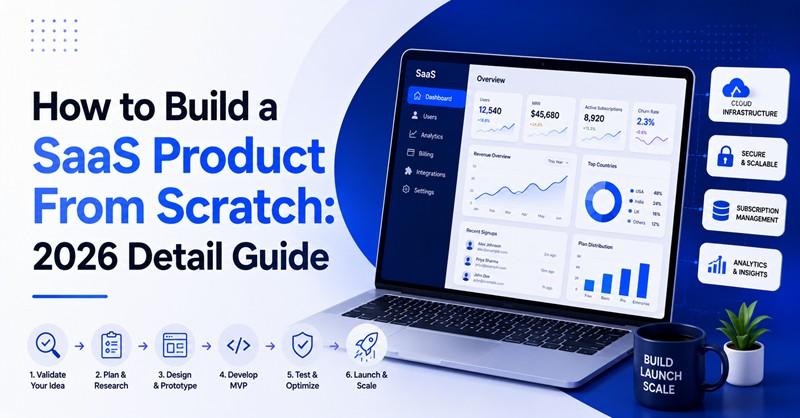
Here’s the uncomfortable truth this entire guide points to: the biggest risk in 2026 isn’t building slowly — it’s building the wrong thing quickly. Technobrave’s SaaS Product Development Services begin with a structured discovery sprint that defines your scope, validates your personas, and produces a realistic cost estimate before any contract locks you in. And if you want to understand the full journey beyond the MVP stage, our step-by-step guide on How to Build SaaS Product from Scratch maps the road from first commit to scale.
Conclusion
SaaS MVP development isn’t a smaller version of product development; it’s a different discipline, optimized for learning per dollar spent. Here’s how to act on this guide in the next 30 days:
- Week 1: Interview 10 strangers from your target market. Write your one-sentence value proposition.
- Week 2: Run a MoSCoW session. Your MVP is the must-have column nothing else.
- Week 3: Build a clickable prototype and put it in front of 5 users. Fix what confuses them.
- Week 4: Define your three launch metrics, shortlist development partners, and get discovery-backed estimates.
Validate one urgent problem, build only what solves it, price it from day one, and let user behavior drive every iteration after launch. That’s the pattern behind every SaaS success story and it’s fully within your reach this quarter.