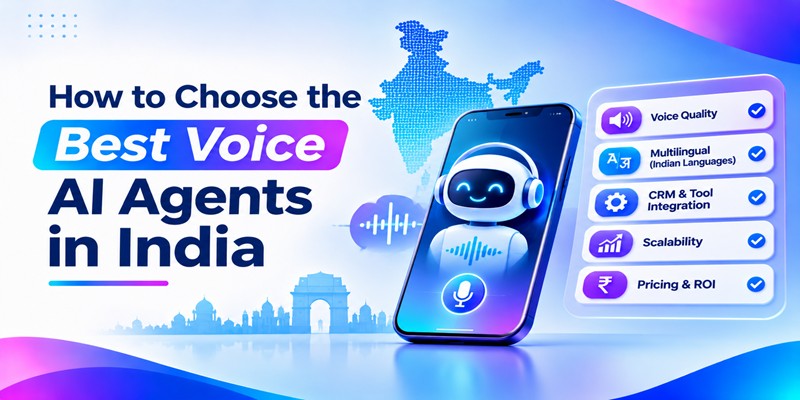
If your sales team spends half the day dialling numbers that never pick up, or your support line goes silent every Sunday, you already know the problem. Phone calls still drive a big share of business in India. People like to talk to someone before they book a site visit, pay a premium or confirm a doctor’s appointment. But building and keeping a large telecalling team is expensive, and call quality usually drops the moment volumes spike.
This is exactly why more Indian companies are looking at voice AI agents. These are systems that answer or place calls, hold a real conversation, and finish a task like qualifying a lead or confirming a booking. The technology has improved a lot in the last couple of years. The catch is that the number of vendors has grown just as quickly, and almost every one of them claims to have the most human sounding AI caller on the market.
This guide is here to help you cut through that noise. We will cover what a voice AI agent actually does, the features that matter, the questions to ask before signing a contract, and how different industries in India are already using them. We will also show how one platform, Algho AI, measures up against this checklist.
What is a Voice AI Agent, Really?
A voice AI agent is not the old IVR that asks you to press 1 for sales and 2 for support. It listens to what the caller says in their own words, understands the intent, and replies in a natural voice. Behind the scenes it combines three things: speech recognition to turn voice into text, language understanding to figure out what the person wants, and text to speech to respond. If you want a deeper look at the mechanics, this explainer on how AI calling agents work breaks it down step by step.
The real value comes from what happens after the conversation. A good agent can book a slot in your calendar, update a lead in your CRM, send a payment link on WhatsApp or pass the call to a human with full context. In short, it does not just talk. It gets work done.
Key Features to Look for in a Voice AI Agent
Not every AI caller is built the same. Here are the features that usually separate a useful voice agent from one that frustrates your customers.
Natural, Human Sounding Conversation
If the voice sounds robotic or the pauses feel awkward, people hang up within seconds. Listen for natural pacing, a warm tone and the ability to handle small talk like “hello, who is this?” without breaking. Some platforms also let you pick or customise the voice so it matches your brand.
Speech Recognition That Understands Indian Languages and Accents
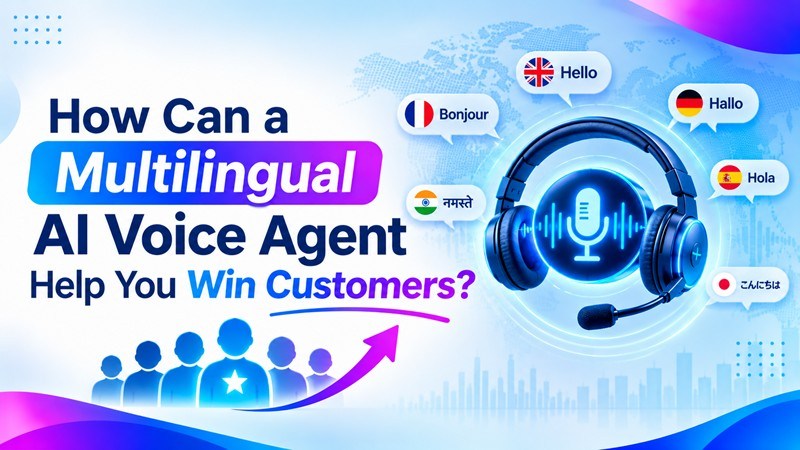
This is the single most important test in India. Your customers might speak Hindi, Tamil, Marathi, Bengali or a mix of English and a regional language in the same sentence. Many will call from a busy street or a moving auto. The agent should understand Hinglish and other mixed speech, cope with background noise, and ideally switch languages mid call if the customer does. We have covered why this matters in more detail in our post on how a multilingual AI voice agent helps you win customers in Hindi and regional languages.
Two-Way Conversations, Not Just Scripts
A basic bot reads a script and waits. A good voice agent lets the customer interrupt, ask a follow-up question, or say “call me after 6” and then actually acts on it. Ask vendors to show you how the agent handles unexpected answers, because real customers rarely follow the script.
Integration With the Tools You Already Use
An AI agent that cannot talk to your systems creates more manual work, not less. Check whether it connects with your CRM (Zoho, LeadSquared, HubSpot, Salesforce and so on), your calendar, WhatsApp Business, helpdesk software and existing telephony or SIP setup. Open APIs and webhooks are a good sign that custom integrations will be possible later. If you are still weighing up the bigger picture, here is a useful read on the benefits of AI integration for modern enterprises.
Smooth Handoff to a Human
Some calls need a person. An angry customer, a complex complaint or a high value deal should move to a human agent quickly. The best systems transfer the call along with a transcript or summary, so the customer does not have to repeat everything.
Analytics You Can Actually Use
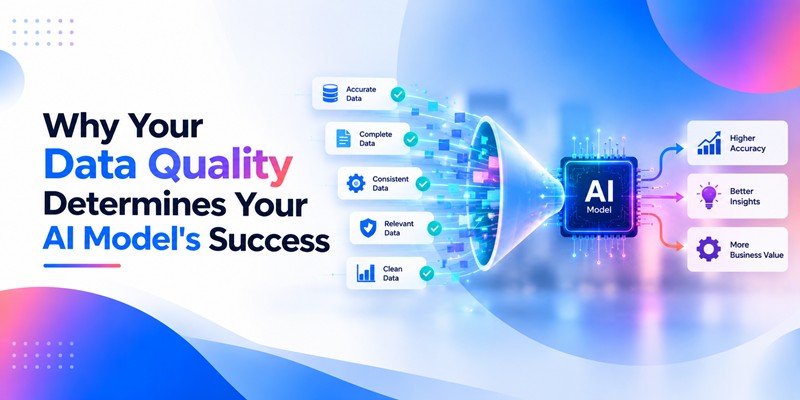
Look for call recordings, transcripts, sentiment tracking and simple reports on answer rates, conversions and drop offs. This data shows you where the script is working and where customers lose interest. Keep in mind that the agent is only as good as the information behind it, which is why data quality plays such a big role in AI success.
Data Security and Compliance
Voice calls often carry personal details like phone numbers, addresses and payment information. Ask how data is encrypted, where it is stored, and who can access it. In India, your setup should support the Digital Personal Data Protection (DPDP) Act 2023 and follow TRAI rules for commercial calls, including consent and DND preferences.
How to Choose the Right Voice AI Solution: A Practical Checklist
Once you know what features matter, use this step by step approach to compare providers.
- Start with one clear use case. Pick a single job first, like lead qualification, appointment reminders or payment follow-ups. It is much easier to measure success when the goal is specific.
- Test in the languages your customers really speak. Do not stop at an English demo. Ask for a test call in Hindi or your regional language, with a few accents and some background noise.
- Listen to real call recordings. Polished demos can hide weaknesses. Ask for recordings of live calls in your industry and listen to how the agent handles confusion or objections.
- Check how easy it is to change scripts. Your offers, prices and processes will change. A no-code or low-code flow builder means you will not need a developer every time you update a line.
- Ask about scale and reliability. How many calls can it handle at the same time? What happens during peak hours or a big campaign? Ask about uptime and backup plans.
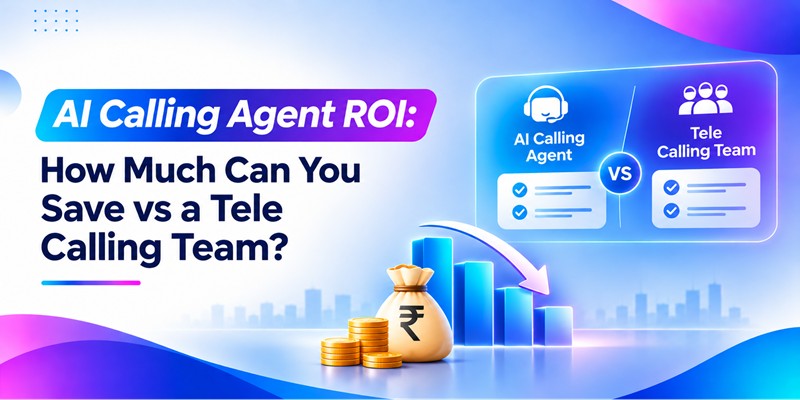
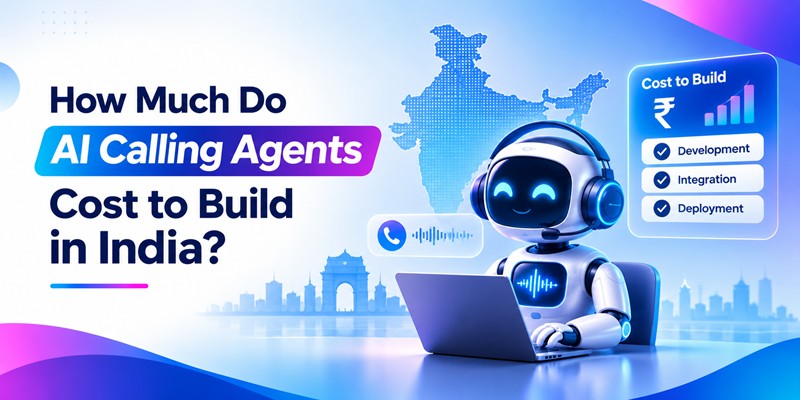
- Understand the full cost. Look beyond the per minute rate. Include setup fees, telephony charges, integration work and ongoing support. Our guide to AI calling agent cost in India covers the main pricing models, and this breakdown of AI calling agent ROI shows how to compare it with a telecalling team.
- Look at support after launch. The first version of any AI agent is never the best one. Check who will review calls, tune the flows and fix issues once you go live.
- Run a pilot before a full rollout. Try it on a small batch of calls for a few weeks. Track answer rates, conversions and customer feedback before moving more volume to it.
Questions to Ask Every Vendor Before You Sign
Keep these questions handy during demos. The answers will tell you a lot about how mature the product really is.
- Which Indian languages and dialects do you support today, not on the roadmap?
- Can I hear recordings from a live deployment similar to mine?
- How does the agent handle interruptions and off-script questions?
- Which CRM and telephony systems have you already integrated with?
- Where is my call data stored, and how long is it kept?
- How do you support DPDP Act and TRAI requirements?
- What does pricing look like at 2x or 5x my current call volume?
- Who on your team will help optimise the agent after launch?
How Algho AI Measures Up Against This Checklist
To make the checklist practical, let us run one platform through it. Algho AI is a conversational AI platform built by Vection Technologies, and Technobrave is its implementation partner in India. Its AI calling agents are designed to answer, qualify, book and follow up on business calls, both inbound and outbound.
Here is how it lines up with the features we discussed:
- Language support: Multilingual conversations, with the ability to switch language in the middle of a call when the customer does.
- Natural conversation: Natural language understanding, emotion analysis that picks up frustration or urgency, and custom or cloned voices to match your brand.
- Integrations: Connects with Salesforce, HubSpot, Zoho CRM, LeadSquared, Freshdesk, Zendesk, WhatsApp Business, Google Calendar and existing telephony or SIP trunks, plus REST APIs and webhooks for custom needs.
- Actions after the call: Can trigger SMS, WhatsApp messages, emails and payment links, and route calls based on intent.
- Human handoff: Transfers to a live agent with the full transcript, so nobody has to repeat themselves.
- Easy changes: Conversation flows are built in a visual, no-code builder.
- Analytics: Transcripts, recordings, sentiment dashboards and reports on resolution rate, call duration, conversions and escalations.
- Security: Encryption in transit and at rest, role based access, and features built to support the DPDP Act and GDPR, with cloud, private cloud and on-premise options.
Two other points stand out for Indian businesses. First, Algho is not limited to phone calls. The same AI can work across website chat, WhatsApp, social channels and kiosks, so customers get consistent answers wherever they reach you. Second, it is built for volume. It answers around the clock, including nights, Sundays and holidays, and can handle a large number of calls at once without putting anyone in a hold queue. For teams that lose leads after office hours or during campaign spikes, that alone can change the numbers.
Technobrave handles the setup in four stages: discovery and design, configuration and integration, testing and launch, then ongoing monitoring and optimisation. That last stage matters more than most buyers expect, because it is where the agent gets better week after week. Whichever platform you choose, ask for the same level of support after launch.
How Indian Industries Are Using Voice AI Agents
Voice AI is not limited to one sector. Here is how different industries are putting it to work.
Real Estate
Property leads go cold fast. Voice agents call new enquiries within minutes, ask about budget, location and timelines, and book site visits for the sales team.
Healthcare and Clinics
Clinics and hospitals use voice agents for appointment booking, reminders, follow-up calls after treatment and answering common questions about timings or doctors.
Banking, NBFCs and Fintech
Payment and EMI reminders, KYC follow-ups and basic account queries are a natural fit. Agents can also send a payment link right after the call.
Education and EdTech
Institutes use AI calling for admission enquiries, counselling follow-ups, fee reminders and updates about exams or classes.
E-commerce and D2C Brands
Order confirmation for cash on delivery, delivery updates, abandoned cart recovery and feedback calls can all be handled at scale without growing the support team. You can read more about AI agents for cart abandonment and the wider role of conversational AI in eCommerce.
Hospitality and Restaurants
Hotels and restaurants use voice agents to confirm reservations, handle booking changes and collect feedback after a visit.
Automotive
Dealerships use them to book test drives, remind customers about service due dates and follow up on insurance renewals.
Algho’s AI voice calling agent solutions already support most of these industries, including real estate, healthcare, BFSI and NBFCs, e-commerce, education, automotive, hospitality, utilities and travel, with call flows designed around each sector’s typical conversations.
Common Mistakes to Avoid
- Automating everything at once. Start small, learn from the data, then expand.
- Pretending the agent is human. Customers are fine talking to AI when it is helpful and honest. Being upfront builds trust.
- Ignoring call data after launch. The biggest gains come from reviewing transcripts and improving the flow every few weeks.
- Choosing only on price. A cheap agent that loses leads or annoys customers ends up costing more.
Final Thoughts
The best voice AI agent for your business is not always the one with the flashiest demo. It is the one that understands your customers’ language, fits into the tools you already use, keeps data safe and keeps getting better after launch. Start with one clear use case, test it in real conditions, and let the results guide your next step.
If you want to see how this works in practice, you can hear a sample call or book a demo of Algho AI. Use the checklist above as you compare it with the other names on your shortlist.