AI calling agents are software systems that answer and make phone calls on their own. They hear the caller with automatic speech recognition (ASR), decide what to do using a large language model (LLM), and reply in natural speech through text-to-speech (TTS). Gartner projects conversational AI will cut contact center agent labor costs by $80 billion in 2026.
Picture a customer in Pune calling your helpline at 9:40 pm. Nobody picks up, or an IVR asks her to press 4 for an option she cannot find.
She hangs up and buys from the competitor who answered. That missed call repeats thousands of times a day across Indian businesses.
AI calling agents fix this by answering every call, in the caller’s language, at any hour. This guide explains how the technology works, what it costs, and how to deploy it with Algho, the voice AI agent Technobrave delivers for businesses in India.
KEY TAKEAWAYS
- Gartner forecasts conversational AI will reduce contact center agent labor costs by $80 billion in 2026. Labor makes up as much as 95% of contact center costs.
- By 2029, Gartner expects agentic AI to resolve 80% of common customer service issues without human help, cutting operational costs by 30%.
- Every modern AI calling agent runs a hear, understand, act, and reply loop that must finish in about a second to feel human.
What are AI Calling Agents and How Do They Work?
AI calling agents are autonomous voice systems that listen, reason, and act during a live phone call, then finish the task without a human. They replace rigid IVR menus with open, natural conversation.
Older press-1 systems broke the moment a caller used an unexpected word. Modern conversational AI calling understands intent instead, so “move my delivery” and “can you change the date” trigger the same action.
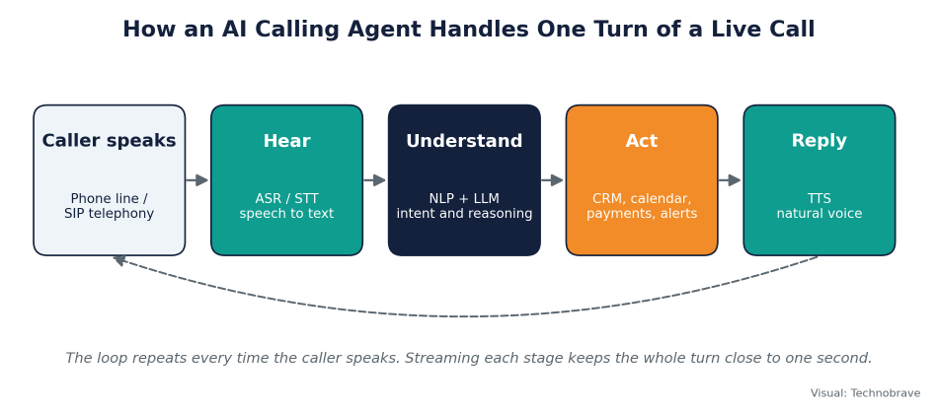
Behind every call sits a four-stage loop that repeats each time the caller speaks. The diagram below shows one full turn of that loop.
How does the agent hear the caller?
The first stage is automatic speech recognition, also called speech-to-text (STT). It converts the caller’s audio into text in real time, streaming words as they are spoken.
Strong voice recognition must cope with phone-line audio, traffic noise, and regional accents. In India, it must also follow callers who switch from Hindi to English mid-sentence.
How does it understand what the caller wants?
Next, natural language processing (NLP) and a large language model read the transcript. The LLM spots the intent, remembers context from earlier in the call, and picks the next best action.
This is where conversational voice AI leaves scripted bots behind. The model reasons over your knowledge base and business rules rather than matching keywords.
How does it take action during the call?
An agent that only talks is a glorified FAQ. Production systems call tools mid-conversation to check order status, book a calendar slot, update a CRM record, or send a payment link.
That is the real difference between answering a question and resolving a call.
How does it reply in a natural voice?
Finally, TTS turns the response into speech. Neural TTS adds natural pauses, intonation, and even a cloned brand voice, so every caller hears the same warm, consistent agent.
Why Does Response Speed Decide Whether Callers Trust AI Calling Agents?
Response speed is the single biggest factor in whether an AI call feels human. If the agent pauses for two or three seconds, callers talk over it, repeat themselves, or hang up.
Well-built systems stream every stage. Speech is transcribed while the caller is still talking, the LLM starts generating once intent is clear, and audio begins before the full reply is ready.
Two more abilities matter just as much. Barge-in lets callers interrupt naturally, and smart end pointing detects when someone has truly finished speaking rather than pausing to think.
CTOs should ask vendors for end-to-end response time measured on real Indian mobile networks, not a demo over office Wi-Fi. That one number predicts caller satisfaction better than any feature list.
What Results Are Businesses Seeing With AI Calling Agents?
Businesses using AI calling agents are cutting labor costs, answering faster, and reaching more customers per day. Independent analyst data points in the same direction.
Gartner estimates there are about 17 million contact center agents worldwide, and labor can represent up to 95% of contact center costs. It projected that one in 10 agent interactions would be automated by 2026, up from about 1.6% in 2022.
Looking further ahead, Gartner predicts that by 2029 agentic AI will resolve 80% of common customer service issues without human intervention. It links that shift to a 30% reduction in operational costs.
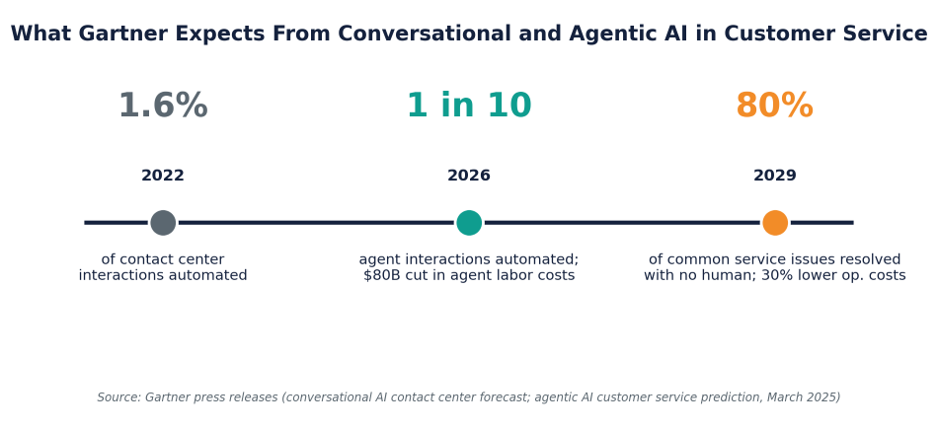
Source: Gartner’s forecasts show automation moving from a niche to the default for routine calls
Where Do AI Calling Agents Deliver the Highest ROI?
AI calling agents deliver the highest ROI on high-volume, repeatable calls where speed matters more than deep empathy. Both inbound and outbound calling benefit.
Which inbound calls should you automate first?
AI inbound calling works best for order tracking, appointment booking, balance queries, complaint registration, and first-level product support. These calls follow predictable paths but spike without warning.
That unpredictability is exactly where human staffing struggles. An AI agent scales from ten calls to ten thousand without a single new hire.
Which outbound calls work best?
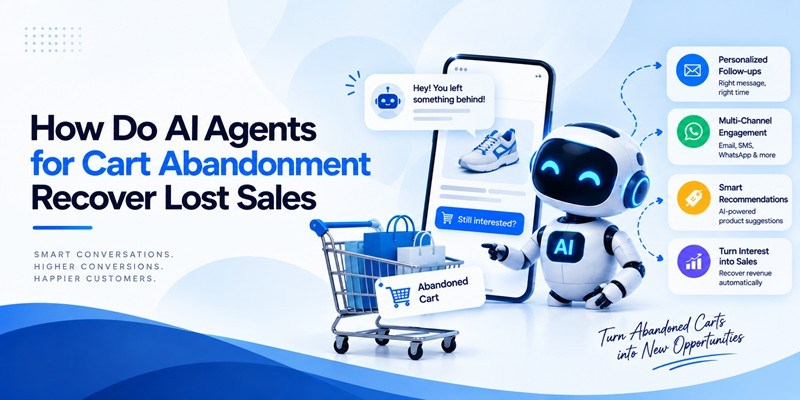
AI outbound calling shines in payment reminders, lead qualification, feedback surveys, renewal nudges, delivery confirmations, and abandoned-cart recovery.
Automated phone calls can run thousands of personalised conversations in parallel, each at the hour a customer is most likely to answer.
For retail and D2C brands, voice works best alongside chat and WhatsApp. Our guide to Conversational AI in eCommerce shows how voice fits into the full buying journey.
Which Indian industries are adopting fastest?
BFSI, healthcare, real estate, edtech, logistics, and eCommerce lead adoption. Each combines large customer bases, multilingual audiences, and tight response-time expectations.
How Do AI Calling Agents Handle India’s Many Languages?
AI calling agents built for India must understand code-mixed speech like Hinglish, regional accents, and noisy mobile lines. A model trained mostly on American English will fail here, however polished its demo sounds.
India has 22 scheduled languages, and many customers switch between two or three in one call. The speech layer must catch that switch, and the reply must come back in the caller’s preferred language.
Algho was built for this kind of multilingual, multichannel environment. It is developed by QuestIT, an AI company with more than 15 years of experience that has been building the Algho platform since 2018.
Algho pairs natural language understanding with voice cloning and emotion analysis. That lets the agent soften its tone when a caller sounds frustrated, instead of reading the same script to everyone.
Technobrave brings the platform to Indian businesses, adding local language tuning, telephony integration, and hands-on deployment support.
How Much Do AI Calling Agents Cost to Build and Run?
AI calling agents cost far less per call than a human agent, but upfront build and integration effort varies widely. Your total depends on call volume, integrations, languages, and compliance needs.
Gartner has estimated integration pricing at roughly $1,000 to $1,500 per conversational AI agent, with some organisations citing up to $2,000. Running costs then come from telephony minutes, speech and LLM usage, and ongoing tuning.
Most Indian SMBs start with a proven platform like Algho and customise it, rather than building from zero. That route usually shortens time to launch and lowers risk.
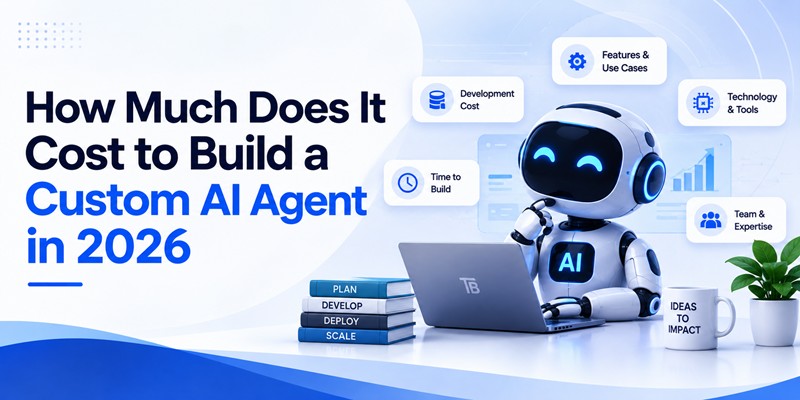
If you are weighing a bespoke build, our breakdown of Custom AI agent development cost explains every cost driver in detail.
A simple rule keeps budgets tight. Automate one painful, high-volume call type first, measure it for 30 days, then expand.
Comparison: Traditional Call Centers vs AI Voice Calling Agents
AI calling agents beat traditional call centers on availability, scale, and cost per call, while people still win on complex, emotional conversations. The strongest setups use both.
| Factor | Traditional Call Center | AI Calling Agents |
| Availability | Shift-based, limited nights and holidays | 24/7/365, no extra staffing cost |
| Handling peaks | Long queues or costly temporary hiring | Scales instantly to thousands of parallel calls |
| Languages | Limited by who is on shift | Multiple Indian languages and Hinglish on every call |
| Wait time | Minutes on hold during busy hours | Answers on the first ring |
| Cost model | Salaries, seats, training, attrition | Usage-based, falls as volume grows |
| Consistency | Varies by agent, mood, and experience | Same policy-accurate answer every time |
| Data capture | Manual notes, often incomplete | Full transcript, intent, and sentiment logged |
| Complex or emotional cases | Strong human judgment | Hands off to a human with full context |
| Time to launch | Weeks of hiring and training | A focused pilot in weeks |
For leaders, the takeaway is redistribution, not replacement. Let AI call center automation absorb the repetitive volume so your best people spend their time on calls that build loyalty.
What Should CTOs Check Before Choosing AI Calling Agents?
CTOs should judge AI calling agents on five things: response speed, language accuracy, integration depth, compliance, and human handoff. How the system behaves on your real calls matters more than any feature list.
- Response speed on real networks. Test on 4G calls from tier-2 cities, not only from your office.
- Language and accent accuracy. Run your own call recordings through the system and check the transcripts line by line.
- Integration depth. The agent must write back to your CRM, ERP, ticketing, and payment tools, not just read from them.
- Compliance. India’s Digital Personal Data Protection Act, 2023 governs caller data. Outbound campaigns must also follow TRAI rules on consent and Do Not Disturb preferences.
- Human handoff. Insist on warm transfers that pass the full transcript, so customers never repeat themselves.
Also ask for built-in analytics such as call summaries, sentiment trends, and top unresolved intents. Those reports become your roadmap for the next wave of AI call automation.
Conclusion
AI calling agents have moved from experiment to core infrastructure in 2026. Voice automation is mature, the economics are proven, and Indian customers now expect an instant answer in their own language.
The winners will not be the companies that automate everything at once. They will be the ones that start narrow, measure honestly, and scale what works.
Every unanswered call is revenue walking to a competitor. Talk to Technobrave about Algho and put your first AI calling agent to work this quarter.