AI-native software products are applications built from the ground up with artificial intelligence as their core architecture, not as an add-on layer. Unlike traditional software retrofitted with AI features, these products use machine learning integration, large language models (LLMs), and AI automation to continuously adapt, learn, and deliver value in ways legacy systems cannot replicate. For businesses, adopting them is quickly shifting from competitive advantage to operational necessity.
Picture the last time your team used a software tool and thought, this thing finally gets what we need. That feeling the sense that the software understands context, anticipates next steps, and actually makes decisions easier is exactly what AI-native software products are designed to deliver, consistently and at scale.
We are no longer in the era of bolting a chatbot onto a legacy CRM and calling it “AI-powered.” The next generation of AI business applications is being built differently: with intelligence woven into every layer of the product, from data ingestion to user interface to automated decisions. That shift carries enormous consequences for how businesses operate, compete, and grow.
Key Takeaways
- The global AI software market is projected to reach $1.8 trillion by 2030, growing at a CAGR of over 36% — meaning early adoption now is a structural advantage.
- Businesses deploying enterprise AI solutions report up to 40% reduction in operational costswithin two years, driven by AI automation of repetitive workflows.
- AI-native products differ fundamentally from AI-enabled ones— the former are designed around machine learning and LLMs from day one, rather than adding features on top of existing architecture.
What Actually Makes a Software Product “AI-Native”?
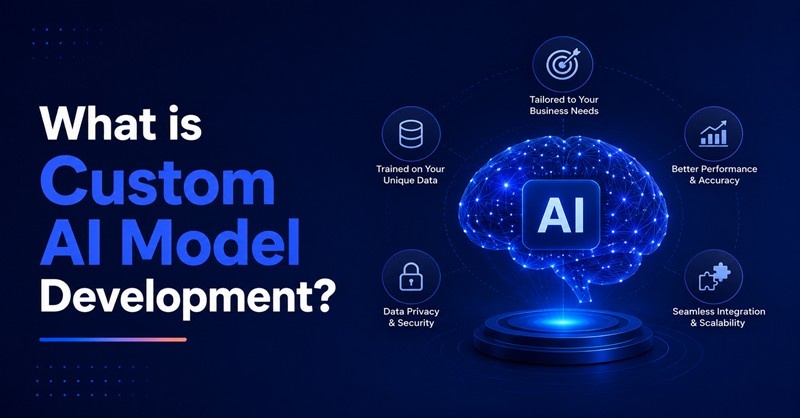
An AI-native product is one where artificial intelligence is not a feature — it is the foundation. Every core function, from how data is structured to how the interface responds, is designed around machine learning integration from day one.
Traditional software follows a deterministic model: input goes in, a pre-programmed rule processes it, output comes out. AI-native software products replace that rigid flow with probabilistic reasoning. A generative AI product, for instance, doesn’t just retrieve an answer from a lookup table — it synthesizes context from multiple sources, weighs probabilities, and produces output that adapts to the specifics of the moment.
Think of the difference between a spell-checker (rule-based) and GitHub Copilot (AI-native). The former catches known errors. The latter understands your codebase’s intent and writes contextually relevant code alongside you. That’s the gap between retrofitted AI and genuine AI-powered software development. As large language models (LLMs) have become cheaper and more capable, this architectural shift has moved from experimental labs into mainstream enterprise products.
Why Can Businesses No Longer Afford to Wait?
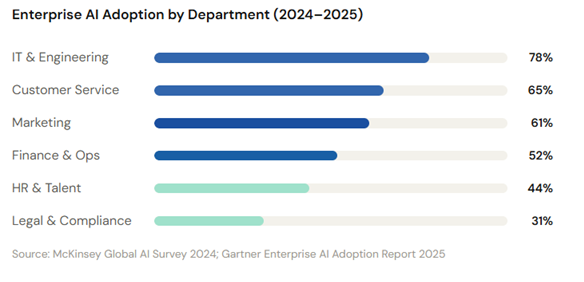
Adoption of enterprise AI solutions has crossed the tipping point — the question is no longer whether to integrate AI-native software, but how quickly you can do it without disrupting existing operations.
In 2024, McKinsey reported that 72% of organizations had adopted AI in at least one business function, up from 55% the previous year. More tellingly, the companies in the top quartile of AI adoption were outpacing competitors in revenue growth by a factor of 1.5×. The gap between AI-enabled and AI-lagging businesses is widening faster than most leadership teams appreciate.
The pressure comes from multiple directions. Customers now expect software to feel intelligent — to surface the right insight without being asked, to automate the obvious next step, and to personalize experiences at scale. Meanwhile, operating costs in talent, infrastructure, and compliance are all rising. AI automation, embedded inside AI-native products, directly attacks that cost curve. Businesses using generative AI products for document processing, customer support triage, and financial forecasting are regularly reporting 30–40% efficiency gains in those specific workflows.
How Large Language Models Are Reshaping the Product Layer
Large language models have become the primary engine behind a new class of AI business applications that can read, write, reason, and act — capabilities that were science fiction for enterprise software just five years ago.
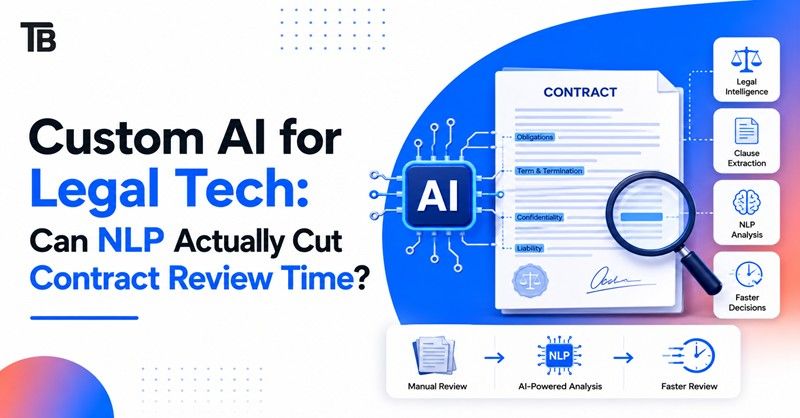
The practical impact is visible across every industry. In legal tech, LLM-powered contract analysis tools are reviewing thousands of clauses in minutes and flagging risk in plain language. In healthcare, AI-native clinical documentation platforms are reducing physician admin burden by generating accurate encounter notes from ambient conversation. In financial services, generative AI products are synthesizing market data, regulatory filings, and client history to produce personalized investment commentary at scale.
What makes this moment different from past AI waves is the accessibility of the underlying technology. Foundation models from providers like Anthropic, OpenAI, and Google mean that a small software team can now build a genuinely intelligent product without training a model from scratch. AI-powered software development itself has accelerated — code assistants, automated testing frameworks, and LLM-driven CI/CD pipelines are compressing development cycles by 20–35% in early adopter engineering organizations.
Traditional AI-Enabled vs. AI-Native Software: Which Is Right for Your Business?
Not every business needs to rebuild from scratch but understanding where the two paradigms diverge helps leadership make smarter investment decisions about their software roadmap.
| Dimension | Traditional AI-Enabled Software | AI-Native Software Products | Best Fit |
| Architecture | AI added as a feature module on existing codebase | AI is the core runtime and decision layer | AI-Native |
| Adaptability | Static rules updated manually by developers | Continuous learning from new data via ML integration | AI-Native |
| LLM Integration | Optional plugin or API call at the surface | LLMs embedded in core workflows and data pipelines | AI-Native |
| Time-to-Value | Faster initial deployment on familiar systems | Steeper setup, but compounding ROI over time | Context-Dependent |
| Cost Profile | Lower upfront, higher long-term maintenance | Higher upfront investment, lower marginal cost at scale | Context-Dependent |
| Customization | Limited to pre-built feature configuration | Deep customization via fine-tuning and RAG pipelines | AI-Native |
| Regulatory Risk | Well-understood compliance patterns | Emerging governance frameworks (AI Act, NIST AI RMF) | Evaluate Carefully |
| Scalability | Scales with infrastructure, not intelligence | Gets smarter as data volume and usage increase | AI-Native |
The table above isn’t an argument to rip-and-replace every system overnight. Many organizations are running a hybrid strategy — keeping mature, stable workflows on traditional software while deploying AI-native tools in high-velocity, high-value areas like sales intelligence, product discovery, and customer success. The key is intentionality: knowing which layer of your stack benefits most from genuine AI-native architecture versus where a well-integrated AI feature is sufficient.
What Should Businesses Do Right Now to Stay Ahead?
The businesses that will lead the next decade are those building the organizational muscle to evaluate, deploy, and iterate on AI-native products today — before the capability gap becomes insurmountable.
Start with a ruthlessly honest audit of your current software stack. Identify three to five workflows where the decision-making is repetitive, data-heavy, and time-sensitive — these are the highest-ROI candidates for AI automation and AI-native replacement. Common examples include customer churn prediction, invoice processing, competitive intelligence monitoring, and employee onboarding.
Next, invest in data readiness. AI-native products are only as good as the data they learn from. Organizations that have invested in clean, well-labeled, and accessible data pipelines consistently outperform those trying to deploy enterprise AI solutions on top of fragmented legacy databases. This is the unglamorous but critical prerequisite for every successful generative AI product deployment.
Conclusion,
Finally, build internal literacy. Your team doesn’t need to become machine learning engineers, but decision-makers should understand what LLMs can and cannot do, where AI automation introduces risk, and how to evaluate vendors claiming “AI-native” status — because many still aren’t. Look for products where intelligence is verifiable in the core workflow, not just in the marketing deck.
Frequently Asked Questions
What is the difference between AI-native and AI-enabled software?
AI-enabled software adds AI features (like chatbots or recommendations) onto a traditional architecture. AI-native software products are built from the ground up with machine learning and LLMs as core infrastructure, meaning intelligence is embedded in every workflow — not bolted on as an optional layer.
Are AI-native products only for large enterprises?
No. Thanks to accessible foundation models and cloud APIs, mid-market and even small businesses can deploy AI-native tools today. Many SaaS vendors offer AI-native products at scalable price points. The barrier is less about company size and more about data readiness and a clear use case.
How long does it take to see ROI from enterprise AI solutions?
Most organizations report meaningful ROI within 12–18 months for targeted deployments (e.g., customer service AI, document processing). Broader transformation projects take 24–36 months. Businesses with clean, well-structured data consistently hit the lower end of that range.
What role do large language models (LLMs) play in AI-native products?
LLMs serve as the reasoning engine in many AI-native products — handling natural language understanding, content generation, summarization, and decision support. They replace rigid rules with contextual intelligence, enabling software to respond appropriately to novel inputs it has never seen before.
Is AI automation a risk to employee jobs in businesses adopting these tools?
AI automation eliminates repetitive, low-judgment tasks — it rarely replaces entire roles outright. In practice, most companies redeploy affected employees to higher-value work. The greater workforce risk is skill obsolescence: employees who do not learn to work alongside AI tools face a widening relevance gap over time.
How should businesses evaluate generative AI products before buying?
Demand a proof-of-concept on your own data before signing. Evaluate where the AI reasoning actually lives in the product workflow — not just in marketing materials. Ask vendors about model transparency, data privacy, hallucination mitigation, and how the product improves as usage grows. Governance and compliance readiness matter as much as capability.